Smartphones emit radiofrequency (RF) energy, but there is no conclusive evidence of health damage when devices comply with established SAR limits. The more clearly documented risks come from how we use our phones: blue light can interfere with sleep, poor posture strains the neck, and excessive screen time can affect mental well-being. The best approach is balanced use and a little distance – without unnecessary panic.
What Is RF Radiation, and Which SAR Values Should You Look For?
Every smartphone emits radiofrequency (RF) radiation, a form of non-ionizing electromagnetic energy used to communicate with cellular base stations. Unlike ionizing radiation, such as X-rays, RF energy does not have enough energy to break chemical bonds directly. However, sufficiently intense RF exposure can heat body tissues.
The key measurement to understand is SAR (Specific Absorption Rate), which measures how much RF energy the body absorbs, expressed in watts per kilogram (W/kg).
In the European Union, the SAR limit for mobile phones is 2.0 W/kg, averaged over 10 grams of tissue. In the United States, the limit is 1.6 W/kg, averaged over 1 gram of tissue.
Manufacturers test their devices and publish their SAR ratings. You can usually find this information under Settings → About Phone → Legal Information or on the manufacturer’s official website.
The practical takeaway: The farther your phone is from your body, the less RF energy generally reaches you. Exposure decreases rapidly as distance increases. Keeping a phone 30 cm away from your body can substantially reduce exposure compared with holding it directly against your ear, although the exact reduction depends on the device and operating conditions.
| Device or Usage Scenario | Typical SAR (W/kg) |
|---|---|
| Phone held against the ear during a call | 0.5-1.5 |
| Phone carried in a pocket | 0.1-0.3 |
| Calling with headphones | <0.01 |
| Airplane mode | 0 |
Note: These figures are illustrative rather than universal measurements. Actual exposure varies with the phone model, signal strength, transmission power, and usage conditions. Airplane mode disables cellular transmission when enabled, but other wireless functions may remain active if switched on separately.
What Does the Research Say? Current Evidence and Scientific Consensus
Scientists have been studying RF radiation for decades, but questions about its long-term health effects have not all been definitively resolved.
The International Agency for Research on Cancer (IARC), part of the World Health Organization (WHO), classified RF electromagnetic fields as Group 2B: “possibly carcinogenic to humans” in 2011.
This classification means that limited evidence suggested a possible association, but the evidence was insufficient to establish a causal relationship.
Group 2B is a hazard classification, not a measurement of the risk associated with ordinary smartphone use. Membership in this category does not mean that two different substances or exposures pose the same level of risk.
One of the largest studies in this area, the Interphone study, published in 2010, examined mobile phone use and brain tumors across 13 countries. It found no overall increase in the risk of glioma or meningioma associated with regular mobile phone use. Some findings among the heaviest users raised questions about a possible association with glioma, but the researchers also identified important limitations, including potential recall bias.
Regulatory agencies, including the US Food and Drug Administration (FDA), generally maintain that the available evidence has not established harmful health effects from RF exposure at levels permitted under current standards.
Nevertheless, research continues, and some authorities advocate a precautionary approach, particularly when discussing children’s exposure.
Real and Exaggerated Risks: Sleep, Eyes, and Posture
The most clearly established health concerns associated with smartphones often relate not to RF radiation itself, but to how we use these devices.
Blue light and sleep
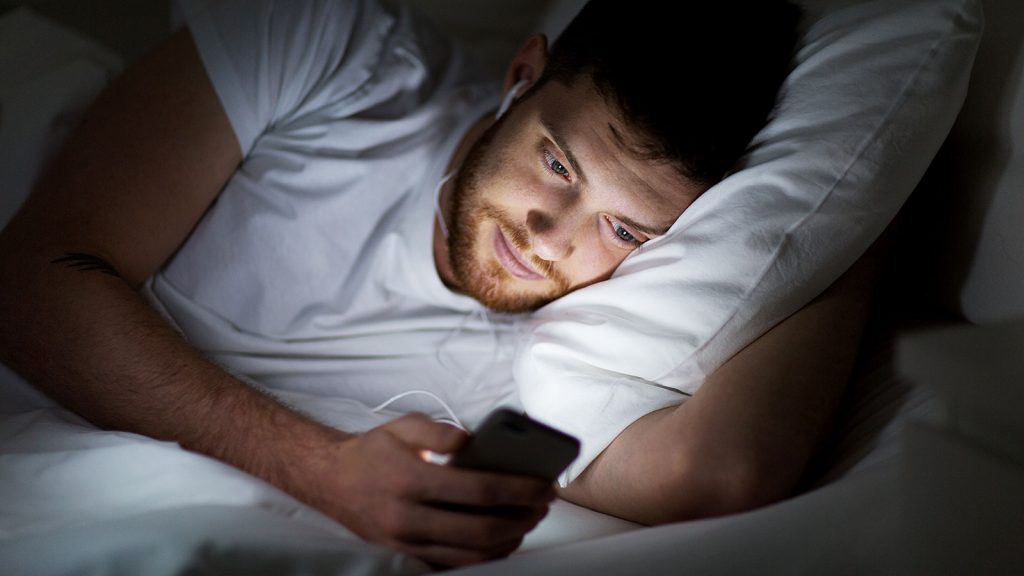
Smartphone screens emit blue light, typically within the 400-490 nm wavelength range. Exposure to light in this spectrum, particularly in the evening, can suppress melatonin production and affect the body’s circadian rhythm.
If you scroll through Instagram at 11 p.m., you may find it harder to fall asleep, especially if the activity keeps you mentally stimulated or delays bedtime.
This is a response to light exposure and screen use, not evidence of harm from RF radiation.
Physical discomfort and repetitive strain
Prolonged smartphone use can also contribute to several physical problems:
- Text neck: Neck discomfort associated with repeatedly looking down at a phone for extended periods.
- Dry eyes: Staring at a screen often reduces how frequently we blink, which can contribute to eye irritation and dryness.
- Repetitive strain: Extended scrolling and repetitive thumb movements can aggravate discomfort in the hands and wrists.
Mental health and concentration
Frequent notifications, fear of missing out (FOMO), and constant interruptions can contribute to stress and make it harder to concentrate.
Research has examined these associations extensively, although the effects vary between individuals and are influenced by factors such as overall screen time, sleep habits, and the type of content being consumed.
These concerns are related to smartphone use and behavior, not RF exposure.
What about the more alarming claims?
Several widely circulated claims have no credible scientific support:
- “5G towers cause COVID-19.” This is false. COVID-19 is caused by a virus, not radio waves.
- “Keeping a phone in your pocket causes infertility.” Some studies have investigated possible associations between RF exposure and reproductive health, but the evidence does not establish that ordinary smartphone use causes infertility.
- “Wi-Fi kills plants.” Claims of consistent, harmful effects from ordinary Wi-Fi exposure are not supported by convincing evidence.
The more practical concern is spending six or more hours a day glued to a screen without adequate breaks, physical activity, or sleep – not simply the presence of RF radiation.
7 Practical Ways to Protect Yourself Without Panicking
If you want to reduce your exposure while maintaining healthy smartphone habits, focus on simple, practical measures.
Here are several steps I recommend:
1. Use speakerphone or headphones for calls.
Even ordinary wired headphones allow you to keep your phone away from your head, reducing RF exposure to the head during a call. Bluetooth headphones also allow you to hold the phone farther away, although they emit their own low-power RF signals.
2. Don’t sleep with your phone next to your pillow.
Place it more than a meter away from your bed, or enable Airplane Mode if you don’t need wireless connectivity overnight.
If you use your phone as an alarm clock, keeping it on a bedside table rather than under your pillow is a simple precaution.
3. Avoid keeping your phone in your trouser pocket during intensive data transfers.
When uploading or downloading data, your phone may increase its transmission power depending on network conditions.
If you want to reduce direct exposure, consider keeping it in a bag or backpack instead of pressed against your body.
4. Enable Night Shift or a blue-light filter in the evening.
Activating Night Shift, Night Light, or a similar feature after 8 p.m. can reduce the amount of blue light emitted by your screen.
However, the reduction varies by device and settings, and these features do not guarantee better sleep. Reducing screen brightness and avoiding stimulating content before bedtime can also help.
5. Follow the 20-20-20 rule.
Every 20 minutes, look at something approximately 20 feet (6 meters) away for at least 20 seconds.
This simple habit can help reduce eye strain during prolonged screen use.
6. Hold your phone at eye level when scrolling.
Looking down at your phone for long periods places additional strain on your neck and upper back.
Try to keep the screen closer to eye level, relax your shoulders, and take regular movement breaks.
Your head weighs roughly 4-6 kg, and bending it forward can increase the load on your neck.
7. Set reasonable limits on screen time.
Take regular breaks, avoid using your phone right before bedtime, and make time for physical activity and face-to-face interactions.
These habits can improve your overall well-being, particularly if smartphone use is interfering with your sleep, concentration, or daily routine.
The bottom line: You don’t need to be afraid of your smartphone. Current evidence has not established that RF exposure from compliant devices causes harm under normal conditions of use. At the same time, research into long-term effects continues.
The most sensible approach is to use your phone in moderation, maintain good posture, protect your sleep, and keep the device at a comfortable distance when practical.

