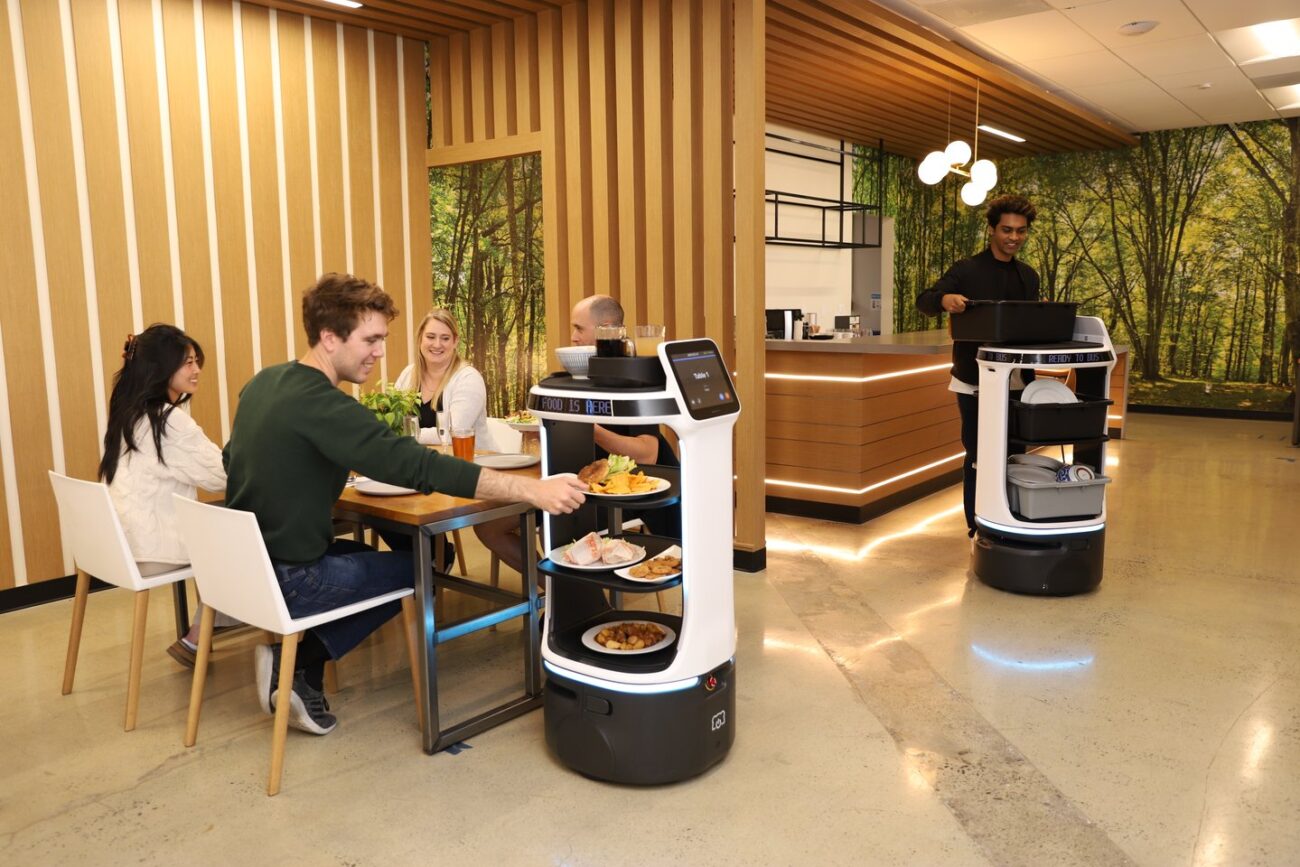
Robots are no longer a novelty. They’re becoming part of everyday services, from cafés to hotels. They offer greater efficiency and consistency, but they also raise an important question: what happens to the human touch in customer service?
What Does Automating Human Services Mean, and Where Are We Already Seeing Robots in Action?
When I talk about the automation of services, I’m not thinking only of metal arms and humanoid waiter robots. It’s a much broader process: replacing routine human tasks with machines that can repeat actions, learn, and respond to their surroundings.
In a restaurant, for example, a robot doesn’t simply carry food. It uses sensors, digital maps of the premises, and navigation software to move safely between tables.
In Bulgaria, the first experiments are already underway. Some restaurants in Sofia are testing robot waiters that deliver orders, while self-service check-in kiosks are appearing in hotels along the Black Sea coast.
Although these solutions are sometimes introduced more as a marketing attraction than a necessity, they offer a glimpse of what’s coming: machines that can work continuously without taking holidays, deliver consistent results, and follow predictable processes.
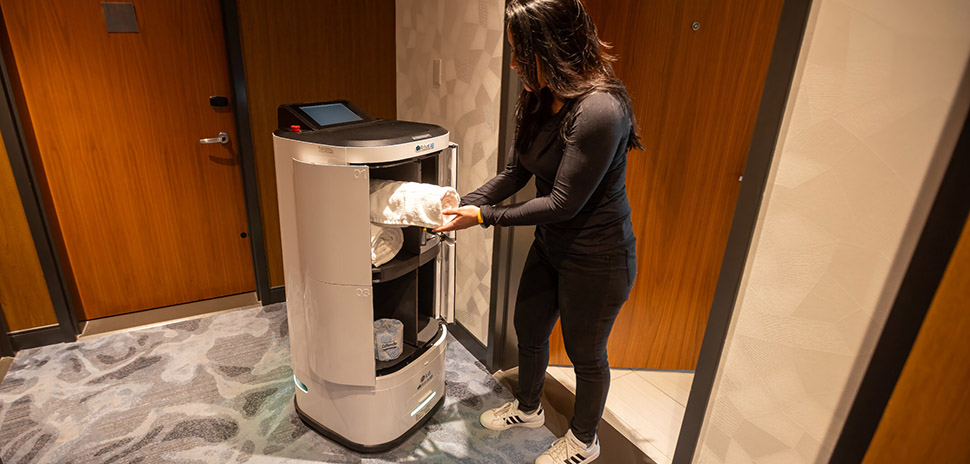
In Asia, similar systems are already commonplace. Restaurants in Japan and South Korea use conveyor belts and voice assistants to handle orders, while hotels employ robots for room service and deliveries.
In Europe, automation is progressing more quietly through self-checkout systems, ordering terminals, and increasingly sophisticated apps that are gradually redefining what a human-delivered service looks like.
Here in Bulgaria, the big question is no longer whether these technologies will arrive, but when they’ll become affordable enough to be widely adopted.
How the Technology Works Behind the Scenes – and What We Gain or Lose
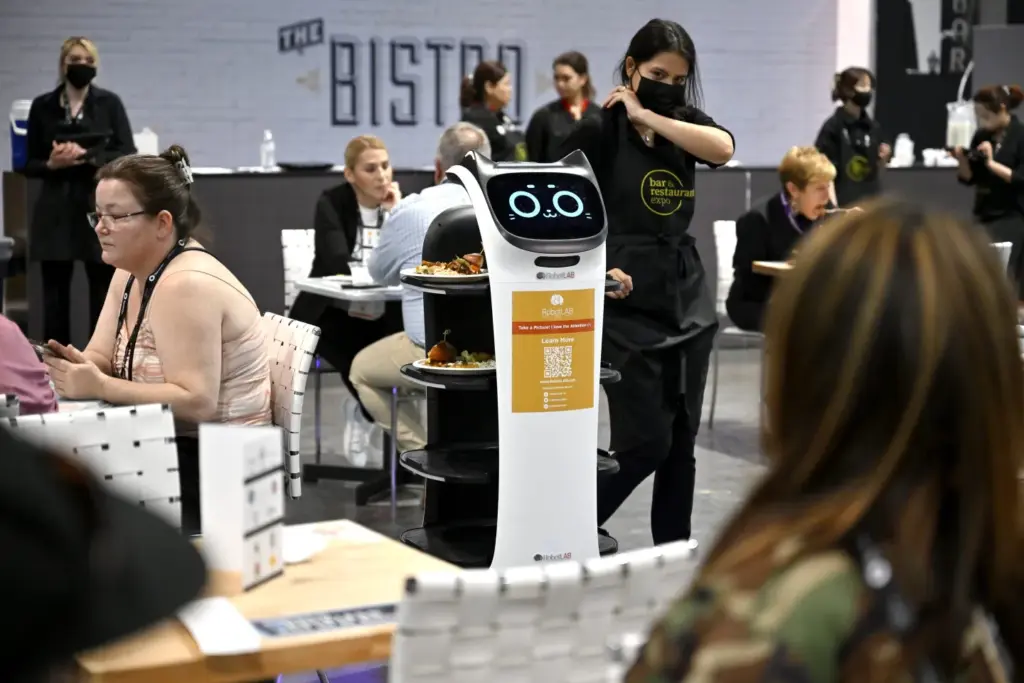
When I watch a robot serving coffee, it’s easy to overlook the complex technology behind that simple movement.
These systems typically combine artificial intelligence (AI), SLAM – simultaneous localization and mapping – and safety sensors. Together, these technologies allow a robot to determine its position, map its surroundings, detect obstacles, and respond to changing conditions in real time.
A central software system coordinates the robot’s movements and keeps track of orders, helping the machine navigate the premises efficiently.
The benefits are clear: consistency, speed, and fewer human errors in repetitive tasks. In busy businesses, such as café chains and hotels, automation can make operations more predictable and potentially reduce operating costs.
In Bulgaria, I see particular potential in places struggling with staff shortages, such as seasonal resorts and businesses that operate around the clock.
However, something is lost along the way: the human touch.
A robot can’t genuinely pick up on the tone of someone’s voice or offer the kind of personal attention that makes a customer feel welcome. And if the system breaks down, the entire process can grind to a halt. Staff members may need technical skills to diagnose problems, restart equipment, or restore normal operations.
This requires new types of training and a shift in mindset. Employees must learn not only how to serve customers, but also how to work with and maintain the machines that increasingly support them.
When Will Automation Become Widespread in Bulgaria?
People often ask me, “So, when will we see robots everywhere?”
My answer is: not tomorrow, but probably sooner than we think.
The widespread adoption of automated services in Bulgaria depends less on whether the technology exists and more on its cost, accessibility, and acceptance by customers.
Hardware is becoming more affordable, while software solutions are increasingly offered as a service through subscriptions, reducing the need for large upfront investments.
The first sectors likely to feel the impact are chain restaurants, logistics operations, and hotel reception desks.
The reason is simple: these businesses rely on standardized processes, making automation easier to implement and potentially faster to pay for itself.
Pilot projects are already being explored in Sofia and Plovdiv, where businesses are looking for ways to address staff shortages during peak hours.
More widespread adoption could emerge around 2027–2028, as local suppliers of service robots become more established, maintenance becomes more accessible, and customers grow accustomed to having a machine deliver their coffee.
Education and healthcare are likely to change more slowly, because human judgment, empathy, and personal interaction remain essential in these fields.
For me, the key isn’t replacement but coexistence: identifying where people have the advantage and where machines can take over the repetitive, time-consuming parts of a job.
That’s where the real value of automation in Bulgaria will emerge.
Which Roles Will Remain Human, and What Should We Do Today to Adapt?
The more I observe automation, the clearer one thing becomes: not every task is suitable for replacement.
Machines excel at repetitive processes. But when empathy, creativity, complex judgment, or unpredictable situations are involved, people retain a significant advantage.
In hotels, these roles include guest experience managers who create memorable stays. In restaurants, sommeliers and experienced staff can interpret customers’ preferences and offer personalized recommendations. In logistics, coordinators make decisions when unexpected problems disrupt normal operations.
In Bulgaria, we still have the advantage of a transition period – time to develop skills that complement machines rather than compete directly with them.
Digital literacy is no longer just a bonus; it’s increasingly a basic requirement for many jobs.
Even a waiter or receptionist may need to understand the systems they interact with, from automated ordering platforms to digital check-in software.
What would I do today to prepare?
First, I’d learn how to work alongside automation. That means understanding how to operate a terminal, interpret information from a digital system, and take manual control when necessary.
Second, I’d think of myself as a human interface between technology and the customer – someone who can bridge the gap between automated processes and real human needs.
This transition won’t happen overnight, and a single training session won’t be enough.
But every small step matters. An online course, learning a new software tool, or simply taking an interest in how a service robot works can help build the skills we’ll need in an increasingly automated workplace.
Ultimately, the goal isn’t to compete with machines at everything they do. It’s to become better at the things they cannot easily replicate: understanding people, solving complex problems, adapting to unexpected situations, and making customers feel genuinely valued.

