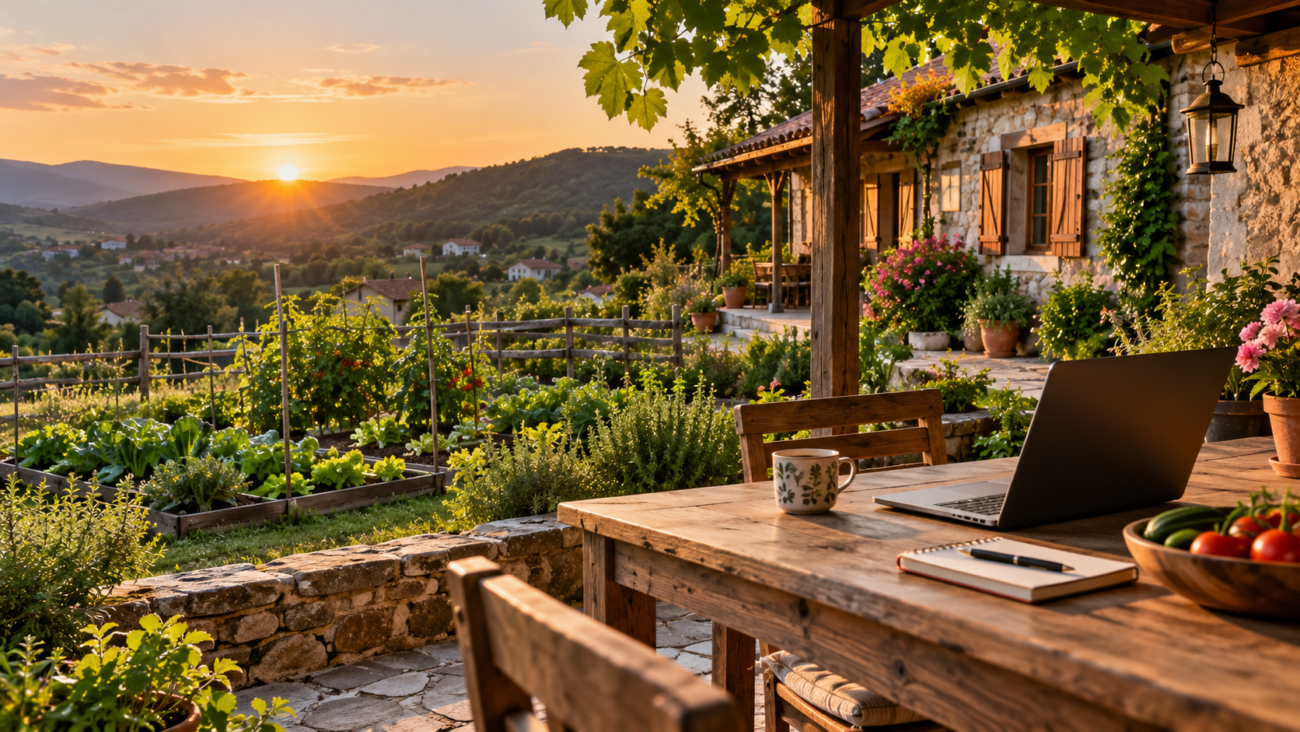
Over the next 10-15 years, robots and artificial intelligence could reshape the job market. Will this encourage us to seek greater independence through rural living, growing our own food, and adopting a more flexible lifestyle?
In a Nutshell
Automation could transform the job market over the next 10-15 years, but that doesn’t necessarily mean cities will run out of jobs. A more sensible strategy is to build greater independence through new skills, financial reserves, and partial self-sufficiency in food production.Will People Move Back to the Countryside Because of Automation?
Living in the countryside could become an increasingly attractive alternative, especially if it combines remote work, access to urban services, and the ability to grow our own food. I wouldn’t bet on a mass migration to rural areas, but rather on a more flexible way of life.
What Will Happen to Jobs as Robots Take Over More Tasks?
When I think about the next 10-15 years, I don’t necessarily imagine a world where robots have replaced all humans. A more likely question is which professions will change so dramatically that some people will find it difficult to get work in the same way they do today. Artificial intelligence (AI) can already perform various information-based tasks, while robotics makes it possible to automate physical activities. However, there’s a difference between what is technically possible and what gets adopted on a large scale. Cost, infrastructure, and the needs of individual businesses all matter.
I would distinguish between two things: jobs that disappear and jobs that change. In offices, automation may take over document processing, handling routine inquiries, and some forms of data analysis. In manufacturing, robots can perform repetitive operations. This doesn’t automatically mean that everyone who loses their job will remain unemployed, but retraining isn’t always easy or accessible to everyone.
Bulgaria also has a local factor to consider: the impact won’t be the same everywhere. A large employer in an industrial zone may automate processes faster than a small business in a regional town. In areas facing labor shortages, technology may compensate for the lack of workers rather than simply replace them.
That’s why I wouldn’t make the categorical prediction that soon there will be no jobs for most people in cities. It’s more sensible to prepare for a period in which some skills lose value while others become more sought-after. And this brings us to an interesting question: if income from employment becomes less secure, will we start valuing land, homegrown food, and the ability to take care of ourselves again?
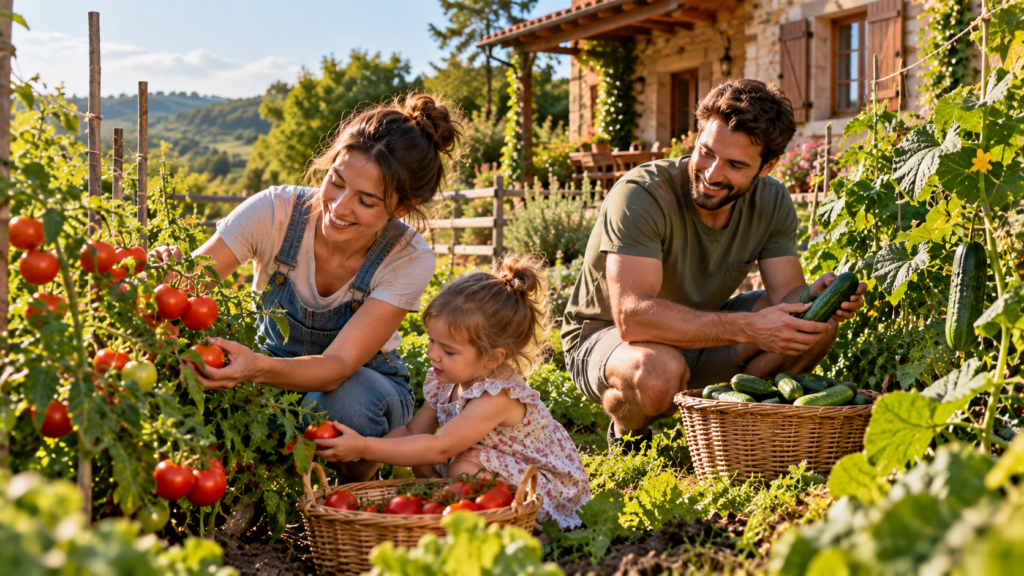
Why the Countryside Could Become Attractive Again
When I imagine rural life 10-15 years from now, I don’t think only about peace and quiet, fresh air, and a house with a garden. I also see a very practical reason why people might reconsider where they live: if more and more work can be done remotely or with the help of automated systems, being close to a major city may no longer be as important. Of course, this depends on the profession, income, and availability of internet access.
There’s another side to it. In the city, we pay for convenience-housing, transport, services, and often ready-made food. In the countryside, some of these expenses can be replaced with our own labor: growing vegetables, planting fruit trees, repairing a fence, or preparing food for the winter. That doesn’t mean rural life becomes free. Land, tools, heating, and maintenance all cost money, while working in the garden takes time and energy.
However, not all villages in Bulgaria offer the same opportunities. Owning a house within a reasonable distance of Stara Zagora, with access to a shop, a doctor, and a reliable internet connection, is one thing. Living in a remote village where even everyday shopping requires a car is quite another. To me, infrastructure-not the romantic image of rural life—is the deciding factor.
That’s why I expect more of a reassessment of rural living than a mass migration to the countryside. For some people, village life could mean more space and lower running costs. For others, it could mean isolation, hard physical work, and limited access to services. The question isn’t simply whether we’ll move back to the countryside, but whether we can combine rural independence with modern conveniences.
Growing Our Own Food and Preserving It for Winter: Independence or an Illusion?
In my opinion, the ability to produce some of our own food could become more valuable if jobs and incomes change. A garden with tomatoes, peppers, potatoes, and a few fruit trees won’t make us completely self-sufficient, but it can reduce expenses and give us more control over what we eat. Jars of lyutenitsa, compotes, and pickled vegetables are also a way to preserve seasonal produce for the winter.
But there’s a catch: homegrown food isn’t free. It requires land, water, seeds, tools, time, and physical labor. During a drought or a poor harvest, we’ll still need to buy food from the store. If we’re starting from scratch, we’ll also need knowledge-when to plant, how to store produce, and how to prepare preserved food safely.
That’s why I wouldn’t view a vegetable garden as a replacement for a salary, but as an additional layer of security. A more sensible approach is to start gradually-with a few easy-to-grow crops, a small plot, and realistic expectations about the effort involved. The goal isn’t to produce everything ourselves, but to become a little less dependent on shopping when it makes sense.
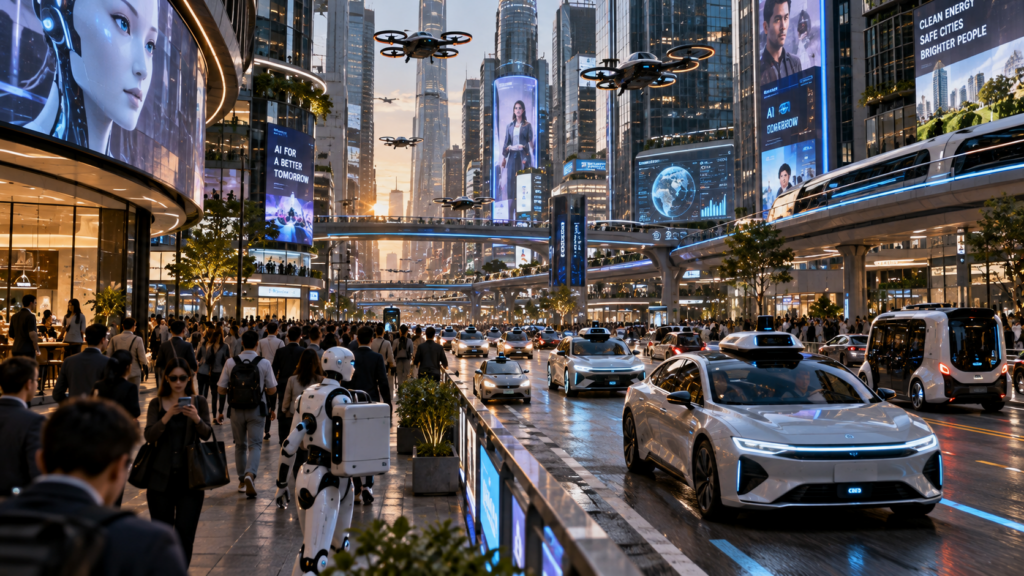
Three Scenarios for the Next 10-15 Years
When I think about life over the next 10-15 years, I wouldn’t bet on a single scenario. Instead, I see three possible directions that could develop in parallel in different parts of Bulgaria.
The first scenario is the technological city. Automation takes over more and more tasks, while people move toward activities that require human judgment, communication, and practical skills. Cities remain attractive because of their jobs, education, and healthcare services. However, access to stable incomes may become more uneven.
The second scenario is a return to the countryside. Some people choose a house with a garden, remote work, and their own food production. Around cities such as Stara Zagora, this could be a practical compromise: more space and the opportunity to grow food without becoming completely disconnected from urban services. The conditions are access to transport, reliable internet, and enough money for maintenance.
The third scenario is a hybrid lifestyle. In my opinion, this deserves the most serious consideration: we live in the countryside, work remotely or commute to the city, buy some of our food, and grow the rest. We don’t aim for complete self-sufficiency, but for more options if our income or circumstances change.
These are scenarios, not certain predictions. Which one becomes more widespread will depend not only on robots, but also on housing prices, infrastructure, social policies, and new employment opportunities. That’s why I would prepare gradually, without betting my entire life on a single prediction.
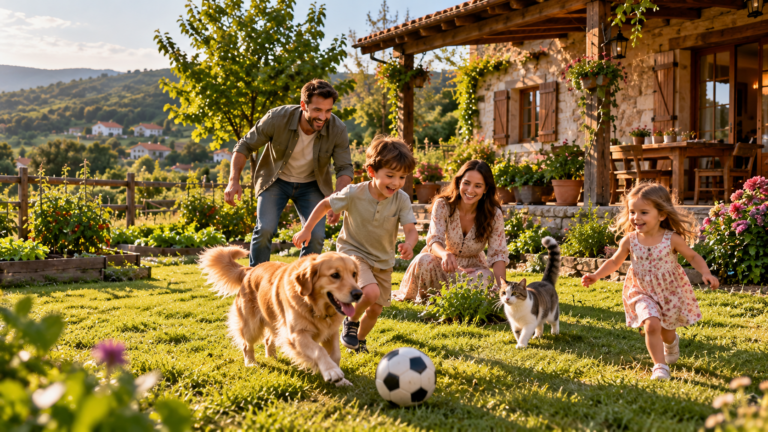
How to Prepare Without Rushing Out of the City
I wouldn’t leave the city simply out of fear that robots will take my job. I would start with small steps: developing a skill that will remain useful, building up financial reserves, and trying to grow some of my own food, even on a balcony or in a small garden. If I were considering moving to a village, I would check the internet connection, transport links, access to a doctor, and the actual costs of heating and repairs.
The next step would be to test the idea before making a major change. Renting a country house for a month or two could teach me more than ten videos about the idyllic side of rural life. It would help me find out whether the daily work, distances, and limited services are something I can realistically live with.
We don’t need to predict the future accurately to prepare for it. It’s more useful to have more than one way to earn an income, provide our own food, and choose where we live.
We Don’t Need to Predict the Future to Prepare for It
We don’t know whether large numbers of people will leave cities because of automation over the next 10-15 years. Different lifestyles will probably coexist: technology-driven cities, more attractive rural communities, and households that combine both worlds.
For me, the most sensible response isn’t to fear robots or romanticize rural life. It’s to give ourselves more choices: develop useful skills, maintain financial reserves, learn the basics of growing and preserving food, and find out what kind of lifestyle actually suits us. That way, if work and the economy change, we won’t have to start from scratch.

