Most parents don’t yell because they’re “bad” parents. We yell when stress, exhaustion, and overwhelm get ahead of our self-control. The question isn’t how to never raise our voices, but how to recognize the moment before we lose our temper and break the cycle more often.
What Happens in Our Brains When We “Snap”?
There’s a moment when we don’t consciously decide to yell. The reaction simply gets ahead of our thinking. I experience it like an overheating processor: my child asks the same question five times, something spills on the floor, the phone rings, and my brain switches into emergency mode.
This isn’t an excuse; it’s a mechanism. When we’re under stress, our nervous system starts operating on a simple principle: “danger → reaction.” Our heart rate rises, our breathing becomes shallower, and our capacity for patience literally decreases. That’s why we sometimes yell over minor things we might not even notice on a calm day.
The problem is that children rarely pick up on nuance. They hear the volume, not the argument. And the more often our home goes into “alarm mode,” the harder it becomes for both parent and child to return to a normal conversation.
That’s why, for me, the question isn’t “How can I never yell?” but rather, “How can I recognize the moment before I snap?” That’s where real change begins.
Why Good Parents Yell Too
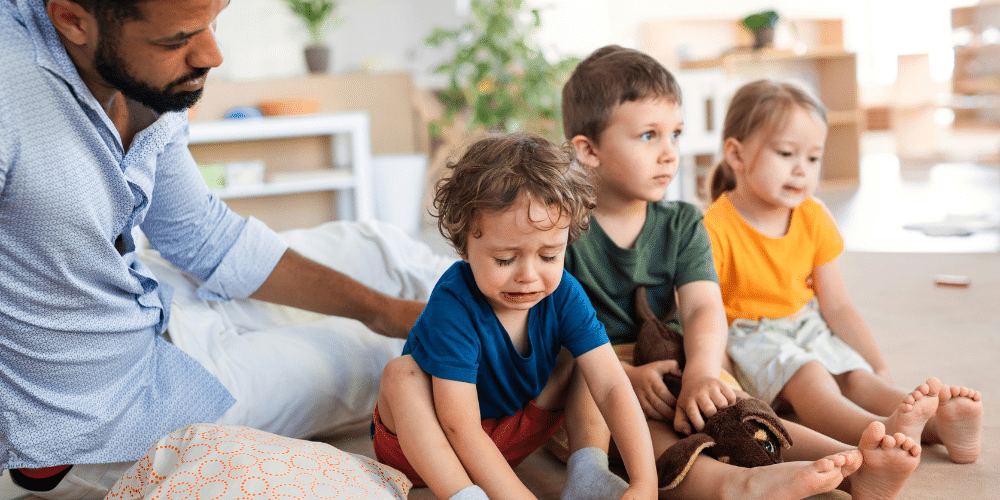
For a long time, I thought yelling was a sign of “bad parenting.” Then I realized something more uncomfortable: often, it’s a sign of being overwhelmed. Several nights of poor sleep, working late, constant noise, and the feeling that everything rests on our shoulders-and eventually, the child becomes the last straw rather than the underlying problem.
There’s another layer to this. Most of us grew up with raised voices as a normal tool for discipline. Not because our parents were monsters, but because it was the model they knew. Under stress, the brain can easily fall back on automatic reactions.
The paradox is that the parents who yell most often are frequently the ones who desperately want to get things right. They try to control everything until they eventually lose control of themselves.
When Am I Most Likely to “Snap”?
– Several consecutive days of insufficient sleep
– Too much noise and no personal time
– Constant rushing in the morning
– Feeling like “I’m the only one handling everything”
– Expecting a child to listen immediately, every time
How Yelling Affects Children in the Long Run
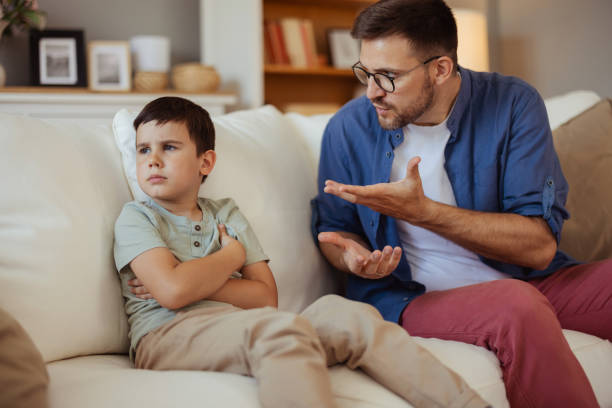
Raising our voices once won’t “break” a child. The problem arises when yelling becomes the primary language spoken at home. A child then begins to live in a state of tension-they either withdraw or respond in the same way.
What we often overlook is that children learn more from our reactions than from our words. If I resolve conflicts by yelling, the chances of my children doing the same later in life increase.
And here’s an uncomfortable truth: fear can sometimes get quick results, but it rarely teaches self-control.
Is Discipline Without Raising Your Voice Possible?
Honestly, I don’t believe in the magical rule of “never yell.” There are days when our nervous system simply gives out. But I do believe that discipline doesn’t have to rely on constant tension and fear.
Over time, I’ve come to understand the difference between setting a boundary and making a threat. A boundary is calm and clear: “You are not allowed to hit.” A threat comes with an emotional explosion: “Just try that one more time and see what happens!” A child might stop in either case, but the reason is different.
Paradoxically, a quiet voice often works better. Not because it’s “soft,” but because it demonstrates control. Children quickly sense whether we’re speaking from a place of confidence or exhaustion.
For me, the realistic goal isn’t perfect calm. It’s a home where yelling isn’t the primary tool for maintaining order.

How to Interrupt the Reaction at the Critical Moment
The hardest moment isn’t after the yelling. It’s right before it-the seconds when I feel my voice starting to rise. If I can catch myself at that point, my chances of avoiding an outburst increase significantly.
What works for me is surprisingly simple: staying silent for 10 seconds, stepping into another room, or deliberately speaking more slowly. None of this sounds revolutionary, but the problem isn’t that we lack the knowledge. It’s that we forget to use it when we’re under stress.
There’s something else, too: children often escalate when they sense us escalating. The more I raise my voice, the more they lose control as well. Someone has to break the cycle and, honestly, that someone is usually us.
Sometimes the most mature response isn’t the perfect thing to say. It’s taking a pause.
What to Do After We’ve Already Gone Too Far
This is where many parents fall into a second trap: guilt. After the yelling comes silence, then self-criticism, followed by the promise, “It won’t happen again.” And then, after a few difficult days, the whole thing repeats itself.
What matters more is what we do after the conflict. Apologizing doesn’t undermine our authority. On the contrary, it shows children what taking responsibility looks like.
Sometimes a calm “I’m sorry. I went too far” teaches more than ten punishments.
Not a Perfect Parent, but a More Self-Aware One
I think many parents set themselves up for failure from the very beginning by choosing the wrong goal. They try never to get angry, never to raise their voices, and never to make mistakes. That’s simply not how real life works.
What’s more important is what happens after a mistake. Can we apologize? Can we say, “I went too far”? For a child, this is a lesson in itself: people sometimes lose control, but they are still responsible for their reactions.
Honestly, I don’t believe in perfect calm at home. I believe in a home where tension doesn’t constantly turn into fear.
And perhaps that’s a good enough direction to aim for.

