Digital money is already changing the way we pay, but the complete disappearance of cash doesn’t seem imminent. A more realistic scenario is a world in which banknotes and coins gradually become a backup option rather than the primary means of payment.
What Do We Mean by “Digital Money” Today?
When we talk about digital money, most people think of using a card or phone instead of a wallet. But the term is actually much broader. It refers to all money that exists primarily as an electronic record-in a bank, an app, or a payment system.
This includes bank transfers, card payments, Apple Pay, Google Wallet, Revolut, online banking, and even some cryptocurrencies.
CBDC (Central Bank Digital Currency) is a separate category: a digital currency issued directly by a central bank rather than by a commercial bank or fintech company.
Interestingly, for many people, the transition has already begun. In Bulgaria, we still pay in cash quite often, especially for small purchases. But in larger cities, phones are gradually replacing wallets-first at the supermarket, then on public transport, and eventually almost everywhere.
How a World With Less Cash Works
The modern payment system has become almost invisible. I tap my phone against a terminal, receive a notification within a second, and often don’t even think about what happens behind the scenes-banks, card networks, tokens, cloud systems, and anti-fraud algorithms.
In my opinion, the most important change is that payment is no longer an event but a background service. Subscriptions, automatic bill payments, QR payments, and online stores are all designed so that I rarely need to take out physical money.
This works beautifully as long as there’s electricity, internet access, and trust in the system. And that’s precisely where cash has a major advantage: a banknote doesn’t depend on a battery, an app, or a server.
In countries such as Sweden, cash has already become uncommon. In Bulgaria, the transition is slower, but POS terminals, online banking, and mobile payments are already changing habits, even in smaller towns.
Why Governments and Banks Are Pushing for Digital Payments
Convenience isn’t the only reason. Digital payments are easier to track, automate, and control. For banks, this means lower cash-handling costs. For governments, it means less of an underground economy and greater visibility into transactions.
There’s also a purely practical factor: younger consumers already expect everything to work through their phones. If a service doesn’t offer online payments, it starts to feel outdated.
But there’s a trade-off. The more payments go through centralized systems, the more dependent we become on infrastructure, rules, and access. Cash is slow and inconvenient, but it’s also one of the few payment methods that works without an intermediary.
Where a Cashless Society Is Already Almost a Reality
Sweden is one of the most frequently cited examples. Some shops, cafés, and even public services there operate almost entirely without cash. Paying by phone has become as normal as sending a text message was 15 years ago.
China is another interesting example, but for different reasons. QR code payments through WeChat Pay and Alipay have completely transformed everyday life-from supermarkets to street vendors. The phone has become a wallet, bank card, and cash register all in one.
In my opinion, the key takeaway is something else: the transition doesn’t begin with a “cash ban.” It begins when digital payments become faster and more convenient than every alternative.
Bulgaria still operates with a mixed payment model. Small shops and service providers often rely on cash, but habits are already shifting toward phones and cards, especially among younger consumers.
What Is Still Preventing the End of Banknotes and Coins?
In my opinion, the biggest obstacle isn’t technology but resilience. Cash works when the network goes down, a payment terminal fails, or a phone battery dies. That may sound like a minor inconvenience-until you suddenly lose access to your own money.
There’s also a social issue. Older people, residents of smaller communities, and those without strong digital literacy still rely on physical money. Eliminating cash entirely would exclude part of society almost overnight.
Another major concern is privacy. Digital payments leave a trail-when I pay, where I pay, and what I spend my money on. For some people, that’s convenient. For others, it’s too high a price to pay.
That’s why I don’t expect a “cashless day” when cash suddenly disappears. A more realistic scenario is that cash gradually becomes a backup option-something like an emergency system we use less often but don’t want to lose completely.
CBDCs, Crypto, and Mobile Wallets: Are They All the Same?
These three things are often lumped together, but they actually work in different ways.
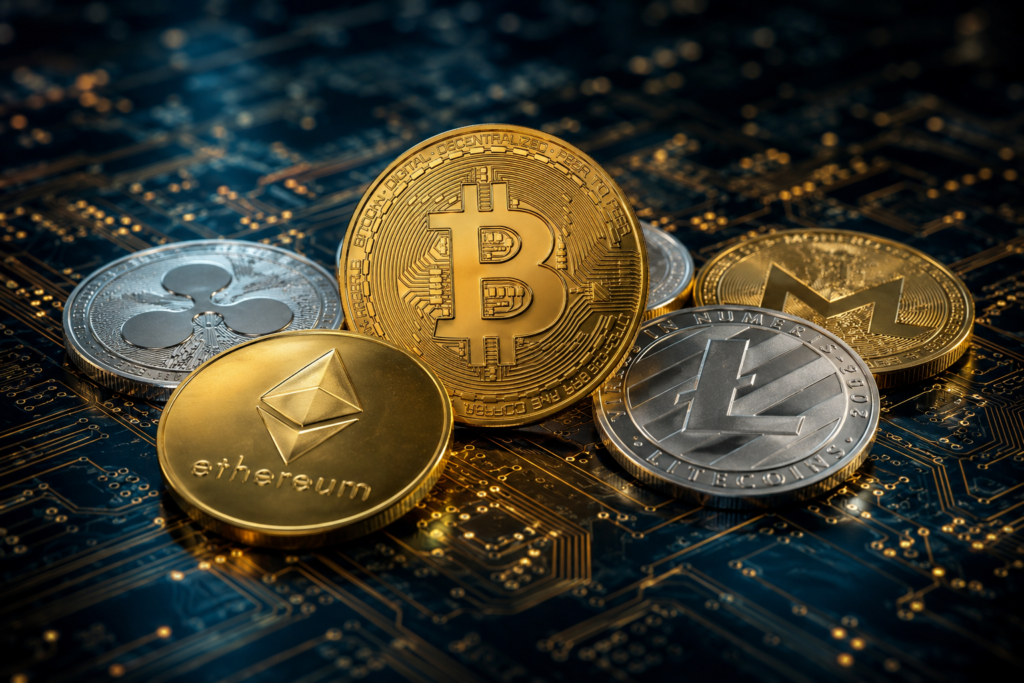
A CBDC is an official digital currency controlled by a central bank. Cryptocurrencies such as Bitcoin operate in a decentralized manner and don’t depend on a government. Mobile wallets, meanwhile, aren’t a new form of money-they simply make it more convenient to access existing bank funds.
This distinction matters because many people imagine digital money as a single, unified technology. In reality, these are different systems with different purposes, risks, and levels of control.
How I Think the Transition Will Unfold Over the Next 10 Years
I don’t think we’ll see banknotes and coins disappear overnight. It’s more likely that cash will gradually become less visible, used mainly during outages, for small local transactions, or by people who simply don’t want everything to go through an app.
Over the next decade, I expect three major developments: more mobile payments, wider adoption of digital central bank currencies, and near-total automation of everyday transactions. Some payments may even happen without us noticing-the car, the subscription service, or the store will pay on our behalf.
In Bulgaria, the transition will probably be slower than in Northern Europe, but the direction is already clear. Following the introduction of the euro and the wider adoption of fintech services, digital payments are likely to become even more commonplace.
My conclusion is simple: the future will probably be almost cashless, but not a future in which we lose the right to use cash.

